









Skip to content
Deux professionnels étudiant un dossier financier, illustrant l'accompagnement de Play In Business pour garantir la rentabilité de votre futur parc de loisirs.

Getting started in the leisure industry requires serious preparation. Choosing your games supplier is one thing, but organizing the operation of your future leisure park is another. Having managed indoor parks ourselves for years, we know the reality of the business inside out.

Customer arrivals in a park are not consistent: there are quiet days and peak-attendance days. You must remain profitable when there are few visitors and limit waiting times when the park is full. To achieve this, we advise you on choosing the building, fitting out the premises, selecting activities, park décor, visitor flow management… Revenue will depend on your capacity, the different services offered, and customer turnover.

We also provide information to help you build a solid financial file, prepare operations for holiday attendance peaks, and train your future staff… By sharing our experience directly, our goal is to offer you practical processes and operating methods so that your venue is profitable and high-performing from day one.

Analyse de graphiques financiers et préparation sur ordinateur. Play In Business vous accompagne pour structurer un business plan solide et convaincre les banques.

Strategic support for your business plan

Creating a convincing business plan requires access to relevant and verified information. To convince banks to support you, your financial forecasts must be precise, realistic, and well-sourced. We help you quantify your project by sharing operator benchmarks: the percentage of staff members, the share of food and beverage revenue in your turnover, the number of birthday parties you can host… Together, we evaluate your future operating costs (rent, payroll, electricity, insurance…). The key is to structure your ideas and transform your vision into an extremely solid banking proposal.

Étude stratégique sur plan d'architecte par les experts Play In Business pour optimiser la circulation et la gestion des flux de votre parc indoor.

Operations optimization and visitor flow management

A beautiful park that is poorly organized will quickly become difficult to manage on busy days. How do you easily welcome 300 people on a rainy Saturday afternoon? Should the reception area and snack bar always be grouped together? How many tables and chairs should you plan for? How do you run back-to-back birthday parties without chaos? We share all the tips directly from operators. Visitor flow management, staff management, hourly capacity of activities, customer access to information… every element is properly organized for seamless coordination. Result: your customers enter the park easily, they purchase with pleasure, and they have a great time, even when the park is full.

Train your teams to combine safety and customer service

The success of your venue depends largely on your staff. A well-trained team is the key to generating revenue: fast and friendly at reception, efficient at the snack bar, welcoming in activities, precise in supervision, preventing accidents—it helps build customer loyalty. We offer comprehensive training modules, delivered directly in your park before opening day.

Master every aspect of the park operator profession

Our training sessions cover the full scope of the park operator role. We address operational organization, human resources, park safety, snack bar management, pricing, upselling, park marketing, communication, upkeep, and maintenance of the structures.

We teach your activity leaders how to brief children effectively before they enter the play areas, how to supervise a trampoline park, and how to manage conflicts. After our intervention, your team will be operational, autonomous, and confident to welcome its first visitors.

In practical terms, how do we support you?

To help you avoid beginner mistakes, we have grouped our advice around the real issues you will face on the ground every day.

Feasibility study

Are your premises suitable?

The priority is to check whether your building is suitable. Is the ceiling high enough? Is your premises already an ERP? How many visitors will you be able to accommodate at the same time at most? From there, we give you an idea of the overall budget to plan for.

Commercial strategy

Set the right prices to be profitable.

Setting the right admission prices is not always straightforward. We support you in developing your commercial strategy, creating birthday packages with strong margins, ancillary sales, and the best tips to bring families back the following weekend.

Safety & standards

Operate your park with complete peace of mind.

Compliance cannot be improvised. Your teams are trained to master health regulations, the well-known European playground standards (EN 1176, ISO 23659), and to know exactly how to react or intervene in the event of an issue within a structure.

Daily maintenance

Make your equipment last longer.

A well-maintained park ages much better and costs you less. We show your teams how to re-tension a net easily, spot slightly worn foam before it tears, and clean the play equipment effectively.

Ready to launch your project under the best conditions?

Do not leave the success of your future complex to chance. Benefit from our operator experience to validate your business plan, train your team, and open your doors with complete peace of mind.

Launch my project
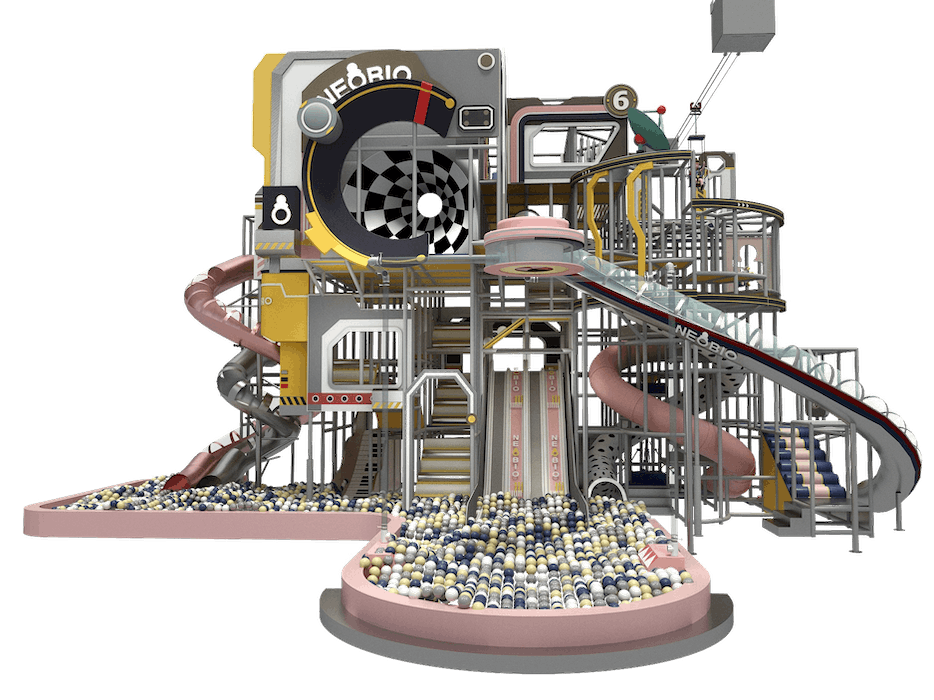
Photo d'un jeu à intégrer dans une aire de jeux. Elle présente notamment un toboggan
Our latest achievements
Blog

ADVICE AND NEWS FOR INDOOR LEISURE

comment choisir sa cible
Indoor playground Open a leisure complex

“Je veux attirer toute la famille dans mon parc, c’est possible” ? 

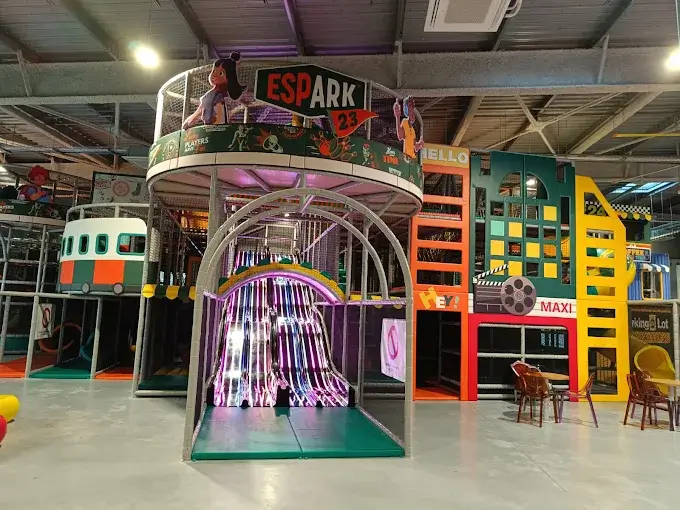
Crédit photo : ESPARK23, Ancenis-Saint-Géréon

Puis-je attirer toutes les tranches d’âges dans mon parc ? 

Voilà une question qui revient souvent auprès des porteurs de projets. Elle est tout à fait légitime et pour cause : ils ont tendance à penser qu’en attirant une tranche d’âge très large, ils pourront attirer plus de public, rentabiliser leur parc plus rapidement et ainsi décupler leur chiffres d’affaires. Cependant, la réalité est toute autre. C’est même le piège à éviter par excellence. 

Mélanger enfant et ado : une bonne idée ? 

La première chose à faire est de se mettre dans la tête d’un adolescent de 15 ans. A-t-il vraiment envie de venir jouer dans un espace où jouent des enfants de 6 ans ? La réponse est claire : non. Il ne voudrait pas être vu en compagnie de plus petits. C’est une question d’individualité. Il a envie d’être considéré comme le jeune adulte qu’il est et non plus comme un enfant. 

Du point de vue des plus petits, il faut prendre en compte les parents et les enfants. D’un point de vue parental premièrement. Une maman qui voit son enfant de 6 ans évoluer dans un espace avec des plus grands de 15 ans ne se sentira pas rassurée. Quant à l’enfant, il n’a pas la même énergie ni la même motricité d’un ado. L’espace n’est alors pas 100% sécurisé pour lui. 

Ce sont deux clientèles bien distinctes avec des codes différents, des besoins et des comportements différents. Il n’est donc pas envisageable de fusionner ces deux tranches d’âges dans un même espace. 

Mono activité ou parc familial : comment choisir ? 

La réponse est plutôt simple. En réalité, c’est la taille de votre bâtiment qui vous dira si vous pouvez envisager d’accueillir plusieurs tranches d’âge, ou si vous devez vous focaliser sur une seule. Pour un bâtiment de 800 à 1000m², notre conseil est simple : choisissez une cible, et tenez-vous-y. Si vous souhaitez accueillir des plus petits, entre 1 et 12 ans, vous pourrez alors opter pour l’aire de jeux. Si vous ciblez les plus grands, ados, voire jeunes adultes, vous pourrez alors opter pour le trampoline parc. Mais pas les deux en même temps. 

Pourquoi ? Cela réduirait trop fortement votre capacité d’accueil pour chaque tranche d’âge et impacterait directement votre chiffre d’affaires. Aussi, vous ne pourriez pas délimiter chaque espace comme il se doit. 

Nous avons accompagné des clients qui ont voulu faire les deux. Résultat : ils n’attirent ni les ados, ni vraiment les familles. On passait par l’aire de jeux pour accéder au trampolines, les adolescents ne se sentaient pas à leur place et ne revenaient pas. Le projet vivotait.

Le trampoline parc, la solution pour attirer les plus grands

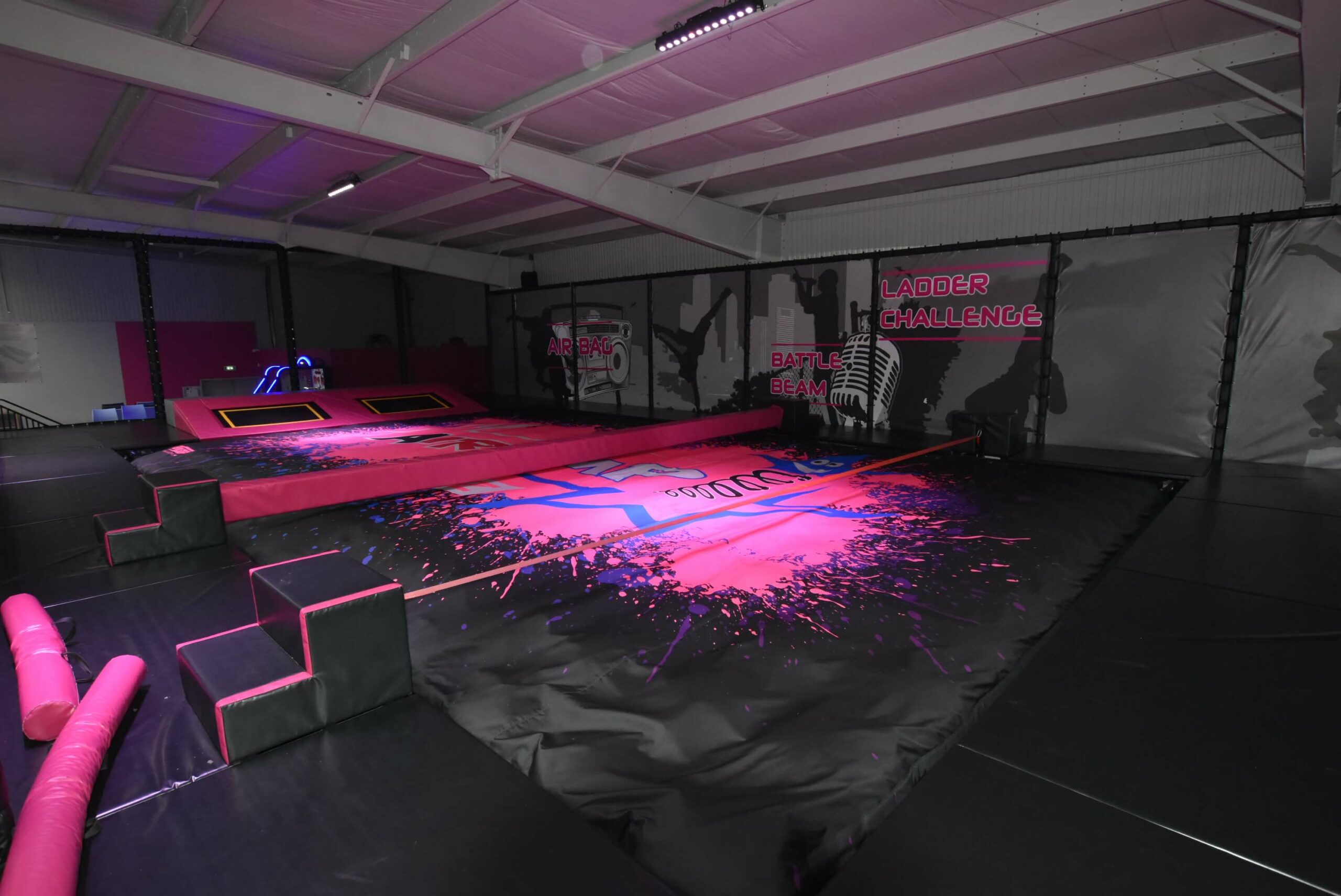
Si aujourd’hui votre parc attire majoritairement les jeunes enfants et que vous souhaitez attirer une clientèle plus mûre, nous vous conseillons vivement d’opter pour le trampoline parc. En effet, cette activité s’oriente tout naturellement vers les 8-16 ans et peut tout à fait se coupler avec une aire de jeux existante. À condition d’avoir l’espace suffisant et de pouvoir bien séparer les deux activités. Les trampolines parcs de nos jours ne sont plus les mêmes qu’à l’époque. Ils permettent de jouer à plusieurs, proposent des jeux diversifiés et plaisent autant aux grands enfants qu’aux ados et même aux adultes. 

L’idéal si votre bâtiment permet d’abriter les deux activités (aire de jeux et trampoline) est d’avoir une entrée commune puis de compartimenter ensuite les deux espaces. Ainsi, chaque tranche d’âge peut profiter librement de son expérience sans empiéter sur le terrain de l’autre. 

Le complexe de loisirs : la solution pour attirer toute la famille

Vous rêvez d’un espace qui puisse réunir les familles ?

Des enfants jusqu’aux parents ? Pour cela une seule solution : le complexe de loisirs. Bowling, laser game, trampoline, aire de jeux, action game… Néanmoins, ce type de projet est d’une toute autre envergure. 

Cela implique une surface bien plus importante à partir de 3.000 jusqu’à 6.000 m² voire 10.000 m² pour les plus grands. Les budgets sont également revus en conséquence : l’investissement est beaucoup plus conséquent et la gestion du personnel plus complexe. C’est un autre métier, une autre échelle, un autre investissement.

Même dans ce cas, la règle de la compartimentation des espaces reste la même. L’aire de jeux ne doit être accessible que par les enfants et leurs parents et sous contrôle d’accès pour des questions de sécurité. Il ne faudrait pas que les enfants puissent sortir comme bon leur semble. Le trampoline parc peut être ouvert, mais toujours sous surveillance. Le bowling peut fonctionner en quasi-autonomie. La clé est de bien compartimenter chaque espace afin de faciliter la gestion des flux et du complexe de loisir. 

Mono-activité ou multi-activités : quelle tendance pour demain ?

Aux États-Unis, on observe depuis quelques années un retour à des parcs à taille humaine qu’on appelle downsizing. Les grands complexes de 10.000 à 15.000 m² ont montré leurs limites : investissements (CAPEX) très élevés, coûts d’exploitation et de maintenance élevés, personnel nombreux, concurrence féroce. Si les parcs font le plein le week-end, ils peinent à rentabiliser leur surface en semaine hors vacances scolaires. On revient à des formats plus maîtrisables et modulaires, entre 2.000 et 5.000 m², avec un meilleur retour sur investissement au mètre carré. 

Si le marché français (et européen) reste dynamique, les clients sont plus exigeants. La multiactivité reste attractive, mais une chose est certaine : la taille ne fait pas tout. Une aire de jeux de 1.000 m² bien pensée, bien thématisée, bien gérée n’a rien à envier à un complexe de 3.000 m² sans âme. C’est la qualité qui fidélise, pas la superficie.

Il y aura toujours des enfants, et il y aura toujours des ados. Le marché se renouvelle en permanence. En revanche, la croissance du marché ne garantit pas à elle seule la réussite d’un parc. Choisissez bien votre cible, construisez quelque chose de moderne et d’innovant, et faites la différence par la qualité plutôt que par la quantité.

Vous avez un projet ? Nous serions ravis d’en discuter avec vous.


success story cover
About us Success stories and testimonials

Play In Business: Our success story, a leisure park creator like no other

Dive into our world with an exclusive interview with Bertrand Coulomb, the founder of Play In Business.

For over 30 years, Bertrand Coulomb has been working in the leisure industry. Since his beginnings at Big Bang Schtroumpf park (now Walygator Grand Est), he has remained in the amusement park sector, becoming a major player in the construction of leisure complexes through his company Play In Business. With one guiding principle: the constant pursuit of excellence.

Discover this interview here:

  • Can you tell us the story of Play In Business?

Bertrand Coulomb: Play In Business was founded in 2013 in Luxembourg, a country located in the heart of Western Europe, with excellent connections between capital cities. This company is the culmination of many years as a partner to European manufacturers. After collaborating with the largest manufacturers, installing hundreds of equipment pieces, regularly discussing with operators, and participating in the development of safety standards, I wanted to propose new ideas, greater theme and provide more efficient service to our clients.

We established partnerships with suppliers selected for the quality of their products, their service, their innovation, and their originality. We thus became manufacturers of our own play equipment.

  • What were the key stages in the growth and success over the years?

Bertrand Coulomb: One of the crucial stages was to stop being resellers and become manufacturers of play areas, enabling us to respond more effectively to our clients. We finally design the play equipment we want, with high-quality materials and advanced theming.

Then the evolution toward multi-activity allowed Play In Business to offer equipment beyond play areas, such as the trampoline parks that we also manufacture.

Aminata Ndao played a crucial role in this development. Coming from the French subsidiary Ludo et Cie, she was an enormous boost for Play In Business thanks to her responsiveness and extraordinary work capacity. She became the partner I had been waiting for.

  • What elements have contributed to making Play In Business a leader in the construction of indoor play areas and trampoline parks?

Bertrand Coulomb: I think our clients first appreciate the relationship we create with them. We share our experiences, listen to their expectations, spend time finding the perfectly adapted solution for the project, visit parks we have built together, and draw detailed 3D designs of the project to ensure perfect understanding.

Then, the quality-price ratio of our trampoline parks and our indoor play areas completes the convincing of our clients.

Of course, having operated a park for several years and participated in the development of safety standards also reinforces our credibility, and we maintain contact with our clients after their opening.

  • Could you share an example of an iconic project that has marked the history of Play In Business?

Bertrand Coulomb: Cosmic Jump is a striking example. It was our first large trampoline park (1,200 m2 of play equipment), installed in early 2018, with significant technical constraints and many activities such as dodge ball, half pipe, foam pit, and ninja course. The park was a success, and we then installed one of the largest modular play structures in France in the adjacent building for the same client!

  • Can you tell us about the innovations or new trends that Play In Business has introduced this year in its indoor play areas and trampoline parks?

Bertrand Coulomb: The arrival of the ISO EN23659 standard this year shook up the trampoline park industry somewhat, but it accelerated the professionalization of the sector. We place great importance on compliance with European standards, and we support operators to ensure optimal safety for jumper visitors and their own peace of mind.

Interactive games have also taken a prominent place at the expense of the free jump zone. Interactivity has truly become a must-have in trampoline parks, and Play In Business integrates several games into each project, such as Cardio Wall, Valo Jump, Freedom Gaming… Modular play structures are not left behind with interactive screens or the Talking Bag!

  • What are the upcoming projects for Play In Business for next year?

Bertrand Coulomb: We have developed a new range of pretend play equipment. With these games making a strong comeback in playgrounds, we couldn’t pass up the opportunity. In addition to our initial range of small play structures covering 2–3 m², we now offer role-play areas spanning 20–30 m² with plenty of interactive features. The first park to feature this range was Chibiotopia near Strasbourg, which has proved a huge success, and the brand is now expanding under licence.

We’ll be attending IAAPA in London in September 2026 – the attractions industry’s largest trade fair – to showcase this new range. This time, it’ll be the visitors who get to play like children!

As for our upcoming installations for 2027, our schedule is already packed. Stay tuned—we will discuss them soon.

  • In summary, how would you describe the results of the current year for Play In Business in terms of success, achievements, and future prospects?

Bertrand Coulomb: Despite challenges related to client financing, I consider that we have had an excellent year. Our clients are satisfied, the image of Play In Business is very strong, and our quality-price ratio remains excellent. We thank our clients for their trust and collaboration, and we remain available for future projects and park upgrades.

icons of several well-known social media platforms like facebook, youtube, instagram
Marketing et communication Indoor playground

Indoor Play Center and Social Media: Boost Your Visibility

Indoor Play Center and Social Media


Do you own an indoor play center and want to increase your visibility?

Did you know that every day, 45 million French people spend an average of over 2 hours online, including on social media?

That’s right, social media is no longer just platforms—they’ve become essential in our lives.

And also for your indoor play center!

In our digital age, they’ve become essential communication channels that connect businesses to their customers. They also help increase visibility.

For indoor play centers, Facebook, LinkedIn, and Instagram aren’t just apps—they’re unique opportunities to strengthen your online presence and achieve significant return on investment.

Discover here why social media plays an important role:

Brand Visibility and Awareness

Did you know that social media represents the virtual storefront of your indoor play center?

Imagine your social media as your indoor play center’s storefront: accessible to everyone with a simple internet connection.

Being active with engaging content means creating visibility for your indoor play center.

By sharing relevant content, you earn the trust of your prospects and turn them into loyal customers.

Better Understanding of Your Community

Take the time to analyze your community’s comments and messages!

Yes, messages and comments are golden nuggets.

They allow you to directly understand your target audience’s needs and adapt your offering based on their demand—it’s an invaluable tool.

Social media is THE direct bridge between you and your community.

Moreover, this interactivity strengthens the bond between your customers and your indoor play center because you’re INVESTED and you show your COMMITMENT to THEIR opinion, which is very important!

Marketing and Promotion

Goodbye traditional advertising… hello social media!

Accessible and effective, they allow you to precisely reach your target audience.

With precise targeting (if you know your audience well, of course), return on investment is guaranteed, turning visitors into real customers!

On top of that, announcing your events can always attract more people to your indoor play center.

Competitor Monitoring and Market Analysis

Just “follow” them as we say now and… stalk 😉

Look at what works and what doesn’t on your competitors’ social media: number of likes, number of comments, number of followers… Social media gives you direct insight into their strategy.

This analysis allows you to stand out, because in a constantly evolving world, adaptability is: THE KEY.

Then, adapt your strategy accordingly.


In summary: social media is your best friend for your indoor play center!

They create connections, sure, but can generate tremendous visibility if you know how to use them correctly!

Social media is the must-have of modern communication, even at . Don’t wait—it’s time to ride this wave toward success and growth.

Frequently asked questions about support and training

Not necessarily. Many of our clients are investors or entrepreneurs changing careers who come from a wide range of backgrounds. This is precisely why we set up our advisory program. Our team shares its operator experience to fill this gap in technical knowledge and help you avoid beginner mistakes.

Operational training takes place in several stages: from a few weeks for managers to a few days before the official opening of your park to the public for team members. Ideally, these sessions should be carried out once the structures are fully installed and cleaned, so that your staff can practice under real conditions, find their bearings in the space, and take ownership of their future working tool.

Absolutely. Pricing policy is the driver of your profitability. We analyze with you your catchment area, local purchasing power, and the positioning of your complex. On this basis, we advise you on the right price for hourly admission tickets, group rates, and above all the structure of your different birthday packages.

Our training focuses on the core of our expertise: operating the play equipment, managing visitor flows, and park safety. Although we provide valuable strategic advice on the location and organization of your food service area, specific training in food hygiene rules (HACCP) and meal preparation must be carried out by organizations specialized in catering.